





Community Risk Reduction
(Formerly known as Fire Prevention)

FIRE WATCH INFO
FOOD TRUCK INFO

INSPECTION INFO
NEW CONSTRUCTION
APARTMENT GUIDE
Community Risk Reduction Mission & Values
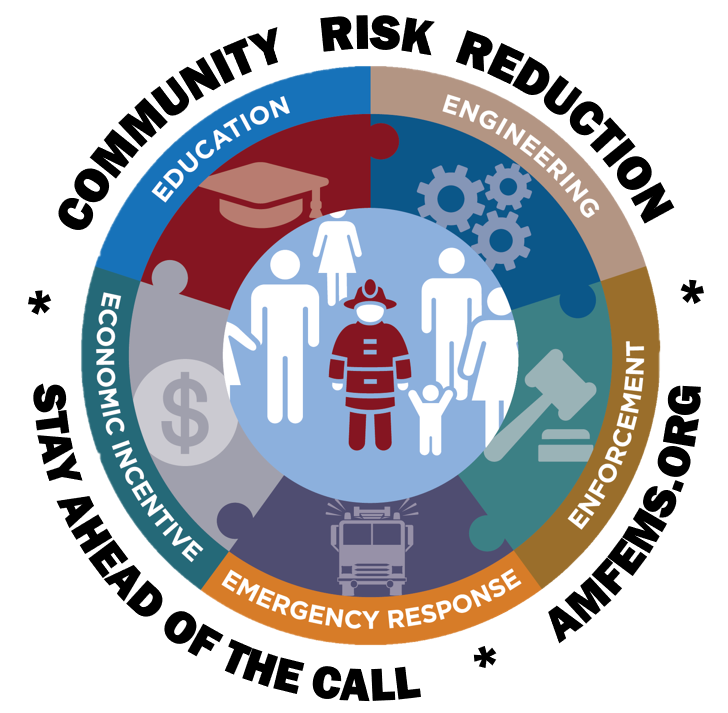
The Community Risk Reduction Division, through collaborative partnerships internal to both our division and the department; and externally with the community, will apply the principles of the Five-E's to reduce threats by fire and traumatic injuries to the lives and property of those that reside, work and visit our district.
The Five-Es will be applied using the following approaches:
- Our Community Risk Reduction section will develop programs and methods to educate people to empower them with knowledge and skills to reduce their risk of threat from fire and injury.
- Our Code Compliance Section will use and apply engineering methodology and practices to ensure that developments, buildings, and life-safety systems are designed and installed to meet the prescriptive requirements of model codes and standards; or meet performance design criteria to achieve a level of protection that is at least equal to those prescribed in model codes and standards. This section will also use ENGINEERING and scientific methods to investigate fires to identify causal factors and develop countermeasures to prevent future occurrences.
- Our Code Compliance/Investigation section will enforce applicable codes and standards in a collaborative manner to ensure that a reasonable level of fire protection and life safety is maintained in our District. The enforcement approach will first seek, when possible, voluntary compliance. Increased levels of severity in acquiring compliance will be reserved for those occurrences where voluntary compliance could not otherwise be gained. This section will also investigate intentionally set fires to identify who is responsible for causing the fire and support our law enforcement partner's pursuit of due process.
- The Division will encourage the use of economic incentives to increase levels of fire safety and encourage code compliance.
- The Division will partner with the Operations Division to support emergency response and assist the organization first responders in providing mitigation of fire and medical emergencies.
Vision
A division that applies the Five-Es of risk reduction in a balanced manner to increase the level of safety from fire and traumatic injuries for the firefighters, residents, business owners, and visitors of the Anchorage Middletown Fire Protection District.
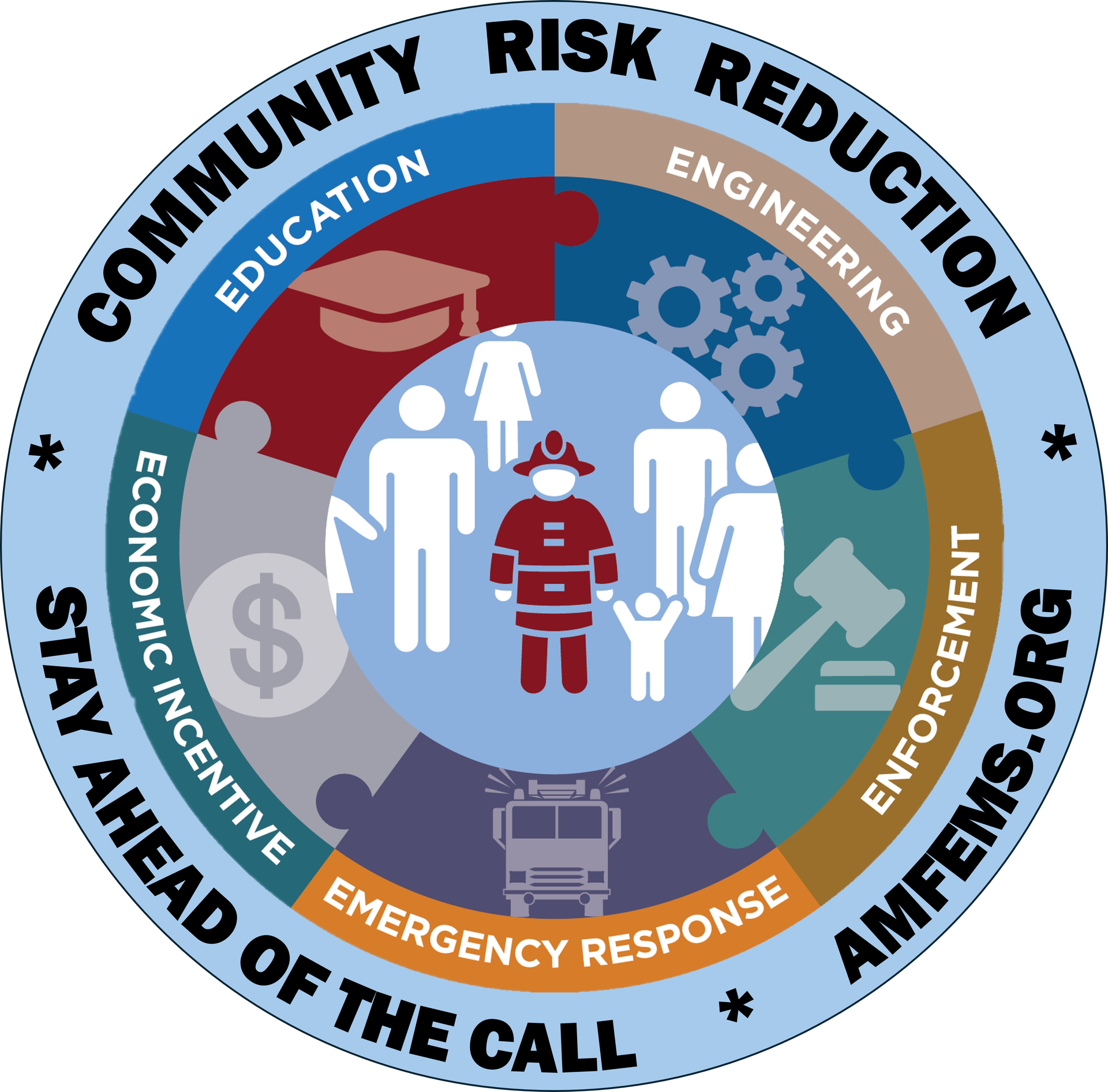
The NFPA (National Fire Protection Association) defines Community Risk Reduction (CRR) as the process of identifying and prioritizing risks, selecting and implementing strategies, monitoring and evaluating activities, and involving community partners, all in an effort to better protect residents and firefighters (NFPA 1300).
When this division was known as Fire Prevention, the main focus was prevention of fires and fire & life safety education. Community Risk Reduction encompasses ALL potential risks to the citizens and strives to reduce those risks, thus making our community safer.
FIRE MARSHAL - Community Outreach
The Anchorage Middletown Fire and EMS (AMFEMS) Fire Marshal plays a vital role in maintaining public safety by preventing fires and ensuring that buildings and public spaces are equipped with appropriate fire and life safety measures. Duties include:
- Inspecting buildings to ensure they meet fire safety codes and regulations.
- Investigating fires to determine the cause and origin.
- Reviewing and approving construction plans.
- Conducting fire safety training and education programs for the public.
- Conducting fire drills and exercises to test emergency procedures.
- Provide public education for Fire Safety and other Community Risk Reduction Topics & Services.
Frequent requests for the Fire Marshal:
Community outreach
FIRE MARSHAL's office - Code Enforcement
Overview
The Code Enforcement program reduces the potential of loss by fire or other hazards through a variety methods including plan reviews, inspections, and testing.
Plan Reviews
We get involved in the planning stages of a building and provide critical input into designing the fire protection and life safety features as well as providing required approvals to the builder/architect. Once construction begins, our inspectors work with contractors to ensure that fire sprinklers and alarm systems, meet all local requirements, Fire Codes and are in working order as they are installed, prior to the final permitting process.
What is required when my business has been told to provide a fire watch?
A Fire Watch is required when the business' fire alarm or sprinkler system has a failure or is not working properly. Please click the button below for specific details and requirements.
What do Fire Inspectors look for and is there a checklist available?
Fire Inspectors perform inspections at multi-family, commercial, industrial, assembly, mercantile, business office and educational facilities prior to occupancy and every 1 to 3 years depending upon the use/hazard of the site.
Local Fire Inspectors DO NOT inspect Daycare, Healthcare Facilities licensed by the state or Public Schools. They are inspected by the KENTUCKY STATE FIRE MARSHAL (click the button below to access their website.)
For new construction checklists, Knox Box Information, building fire safety signage, and BDA information, please click the button below:
Fire Hydrants
Fire hydrant testing is also an important part of the Code Enforcement program. All of the more than 4,000 fire hydrants within the District must be in working order for firefighter use should a fire happen. An annual testing and or inspections are accomplished through a contracted vendor or fire department personnel. Furthermore, this testing is also a vital component of the Insurance Services Office's (ISO) community risk rating program which many insurance companies use to help set the premiums property owners pay for their insurance.
Where do I find what is required or needed to operate a food truck or trailer?